
Latest Insights
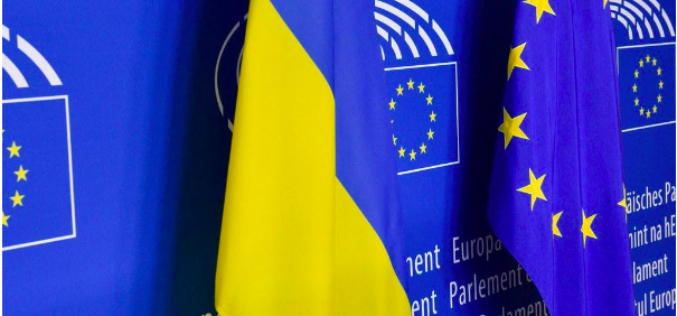
The Eastern Partnership May Need Reform Given Change in US Foreign Policy
The crisis in Belarus and the outbreak of conflict in Nagorno-Karabakh are testing the European Union’s capability to act as a source of regional security. Political instability, violations of human rights and ethnic conflict within members of the Eastern Partnership (EaP) is calling into question Brussels’s foreign policy strategy to further integrate six former Soviet states with the EU.
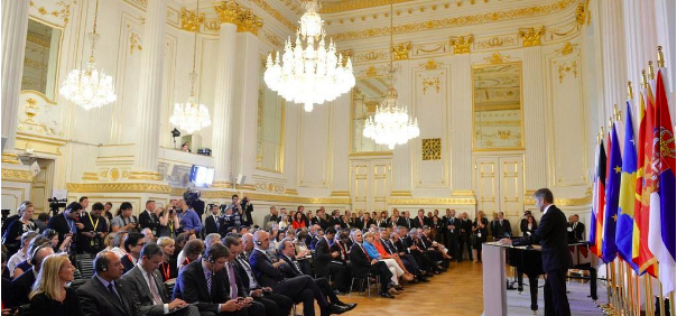
The EU tries to revive Western Balkan Enlargement in Midst of a Pandemic
Russia, China, and the EU have tried to use the Covid pandemic as an opportunity to strengthen their influence in the Western Balkans. An Economic and Investment Plan announced by the European Commission is an attempt by the EU to revive the enlargement process after stalling following the French veto of accession talks with North Macedonia and Albania. The risk for the EU lies in whether the Investment Plan will be enough to help resolve the region’s issues of corruption and internal disputes as well as meet the geopolitical challenge presented by Russia and China.
COVID-19 and the green revolution: A new energy order in the making?
The pandemic has accelerated an ongoing switch towards greener energy, to the point that some foresee a “new energy order” in the making. But these calls are likely exaggerated, with traditional energy sources predicted to stay dominant.
EU treaty instrument may mitigate risk of money laundering in the single market
The European Commission is planning to use Article 116 of TFEU in order to clamp down on multinational companies using favourable tax schemes in some EU member states to their advantage. The treaty instrument is designed to mitigate the risks associated with foreign subsidies that distort competition in the single market.
Under the Radar: The 5G Spat in the Balkans
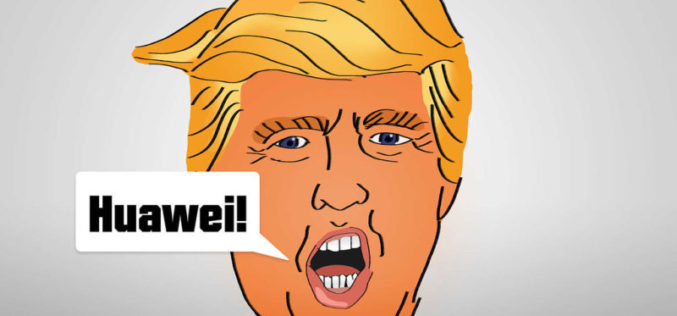
The US Presidency will finally shift in Joe Biden’s hand come January 2021. Yet, there is a fil rouge that connects Barack Obama’s tenure to the current and future foreign-policy orientation of the US, especially vis-à-vis China. The struggle against China is not set to fade in the foreseeable future. Banning Huawei from servicing Western countries’ 5G infrastructure has been a key part of this antagonism. A group of Balkan capitals have just sided with Washnington in its feud with Beijing. However, should the US be concerned about these countries’ economic ties with Beijing undermining their commitment to the common cause?

Amal Center – Rethinking Empowerment in the Midst of a Pandemic
The Amal Center is a non-profit organization in Marrakesh, Morocco focused on helping lift Moroccan women between the ages of 18 and 35 out of poverty. Through a six-month training in the culinary arts, which is funded entirely through the organization, women are to be introduced to the restaurant industry to feel empowered to provide for themselves through employment in this very industry.

China’s Technological Self-Reliance Ambitions: Updates from the Fifth Plenum
[Article by Josh Bramble.] Beijing has long focused on self-reliance in technological innovation as a goal to mitigate dependence on foreign firms. The Chinese Communist Party (CCP) Central Committee’s Fifth

The Uncertain Future of the EU-Mercosur Trade Agreement
In June 2020, the EU and the Mercosur trade bloc, which consists of Argentina, Brazil, Paraguay and Uruguay, concluded negotiations over the Political Dialogue and Cooperation part of their Association Agreement, after the free trade section was completed in June 2019. With a number of EU member states and civil society organisations voicing concerns about the environmental impact of the deal, its ratification is becoming more unlikely in the short-term.
China’s pivot towards domestic-driven growth: not as easy as Xi hopes
China desperately wants to and must recover from its long-lasting dependence on exports as a means of economic growth. This is the objective of the dual-circulation strategy, which is set to become Beijing’s escape plan from the feared middle-income trap. However, with domestic consumption still weak, China is unable to survive without a good injection of public investment to boost its economic engine. The rush of rapid supply-side growth is hard to give up for a country used to abnormally high levels of GDP growth.
The Curse of the White Elephant: The Pitfalls of Zambia’s Dependence on China
Zambia appears to be the first African state that has defaulted on its international debt payments as a consequence of Coronavirus. The Zambian government potentially owes the Chinese government in excess of $23 billion in loans, project money and infrastructure. This article explores some of the problems concerning the Sino-Zambian relationship.
